
Two Paths, One Presence // The Shared Mindset of Riding and Stillness
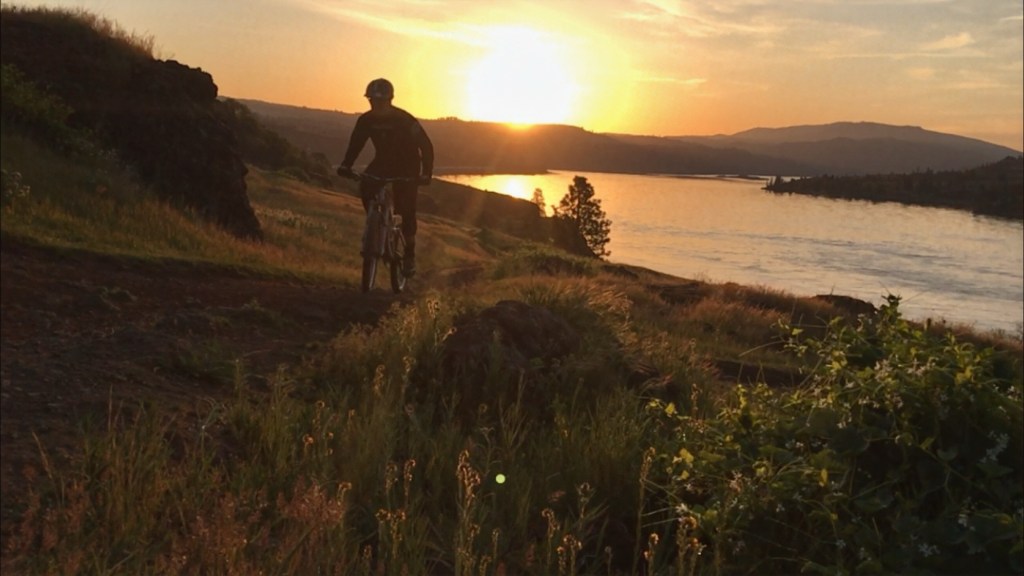
Mountain biking and meditation might seem like activities that exist on opposite ends of the spectrum—one fast, physical, and adrenaline-fueled; the other quiet, still, and introspective. Yet beneath the surface, the two share striking similarities in both their mental processes and their impact on well-being. Both involve a heightened awareness of the present moment, a deliberate focus of the mind, and a kind of flow that transcends ordinary experience. By looking closely at the nature of each practice, it becomes clear that mountain biking can be a form of moving meditation, offering many of the same benefits through a different medium.
At the core of both mountain biking and meditation is attention to the present moment. When riding technical singletrack, a rider’s mind cannot afford to wander. Each root, rock, and turn requires immediate processing and response. Thinking about tomorrow’s to-do list or replaying yesterday’s conversation could lead to a crash. Meditation, likewise, is the art of bringing attention back to the here and now—often through the breath, bodily sensations, or a repeated phrase. In both practices, distractions arise naturally, and the skill lies in gently but firmly returning focus to the present.

Rhythm and breath play a central role in each activity. In seated meditation, the breath becomes a metronome, guiding attention and helping the practitioner settle into a steady mental space. On the bike, breath is both functional and grounding. Long climbs require rhythmic breathing to maintain endurance, while descents often induce short bursts of controlled exhales that sync with technical movements. This natural alignment of breath and body can lead to a meditative state where physical exertion and mental focus harmonize.
Another shared quality is the cultivation of flow—a mental state in which action and awareness merge, time seems to shift, and the sense of self temporarily fades. Mountain bikers often describe moments on the trail where they stop “thinking” and simply respond to the terrain instinctively, feeling completely immersed in the ride. Meditation, especially in advanced stages, can produce a similar dissolution of the internal chatter. Instead of a rider flowing through the forest, it’s awareness flowing through stillness. Both lead to an experience that transcends ordinary consciousness.
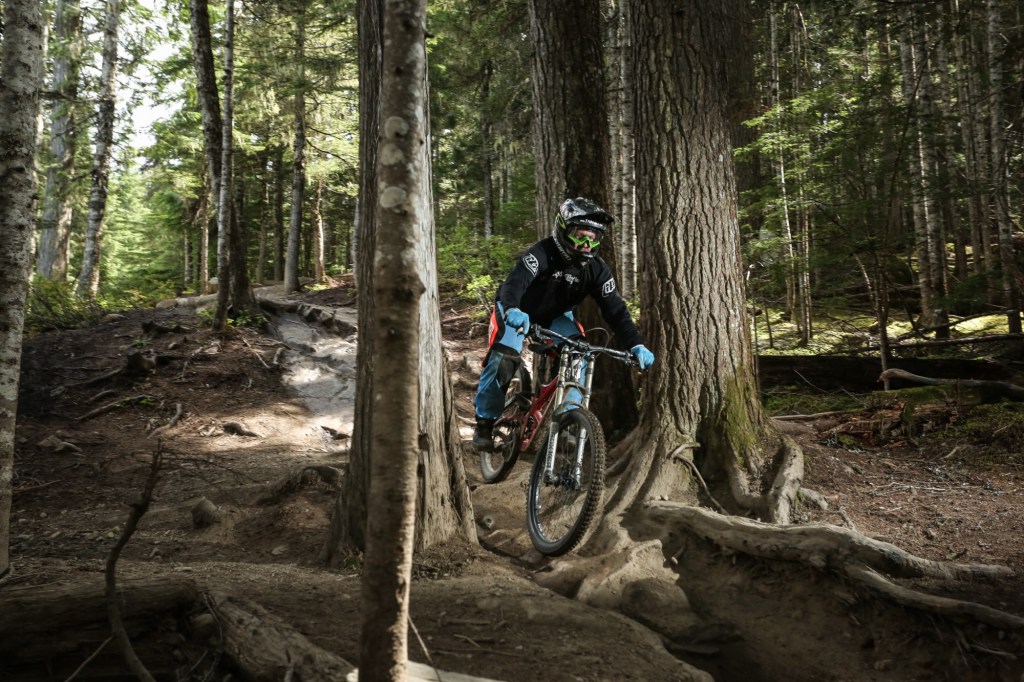
Both practices also teach resilience and acceptance. On the trail, not every line goes as planned. A misplaced tire, unexpected obstacle, or sudden change in weather forces the rider to adapt in real time. Frustration may arise, but it must be released quickly to continue safely. Meditation brings up its own obstacles: wandering thoughts, restlessness, discomfort, or emotional turbulence. In both cases, progress comes from learning to observe these challenges without judgment, adjusting without resistance, and moving forward with presence.
There is also a deep connection to the body that develops through both mountain biking and meditation. In meditation, practitioners become finely attuned to subtle sensations—tension, temperature, heartbeat, breath—often discovering layers of awareness that go unnoticed in daily life. Similarly, skilled mountain bikers are constantly listening to their bodies: the feedback through their hands and feet, the balance point of their hips, the micro-adjustments that keep tires gripping the trail. This embodied awareness fosters a stronger relationship with one’s physical self, promoting both health and self-understanding.

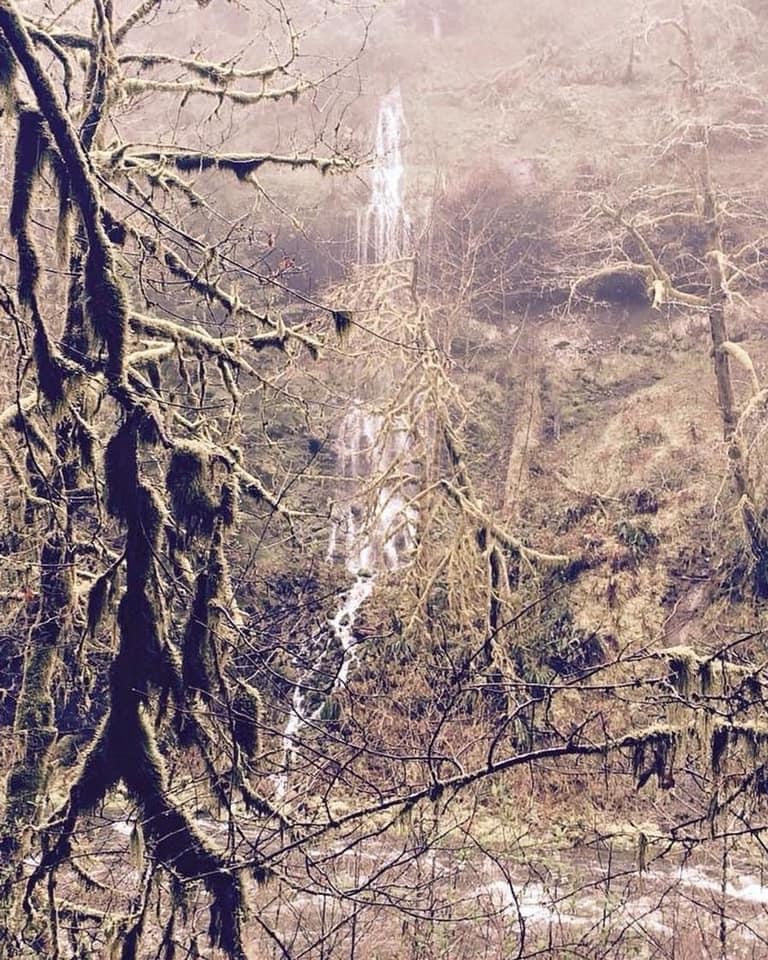
The environment itself becomes a teacher in both practices. Mountain biking often unfolds in forests, mountains, and wild landscapes. The trail’s unpredictability mirrors the unpredictability of the mind, while the beauty of the natural surroundings can invite moments of awe and stillness. Meditation often uses external or internal spaces—such as silence, candlelight, or natural sounds—to ground attention. Both practices cultivate a sensitivity to surroundings that can spill over into everyday life, sharpening perception and deepening appreciation.
Finally, both mountain biking and meditation offer paths to personal growth and transformation. Consistent practice in either discipline builds patience, emotional regulation, confidence, and self-awareness. They reveal how the mind reacts under pressure, how it clings to comfort, and how it can be trained to return to balance. For some riders, the trail becomes a kind of temple—an outdoor meditation hall where mud, sweat, and breath replace cushions and incense. For others, meditation becomes a way to bring the same focus and calm they experience on the bike into daily living.
In the end, mountain biking and meditation are not opposites but complementary forms of presence. One is still, the other in motion, but both offer a way to step out of distraction and into direct experience. Whether seated in quiet or carving down a winding descent, both lead toward the same destination: a clearer mind, a deeper connection to the moment, and a richer engagement with the world. Recognizing this parallel allows riders and meditators alike to draw inspiration from both practices, enriching their inner and outer journeys.

1. Present-Moment Attention & Flow States
Claim: Mountain biking requires intense present-moment focus, similar to meditation.
• Csikszentmihalyi, M. (1990). Flow: The Psychology of Optimal Experience.
• This foundational work describes “flow” as a mental state of complete absorption, where action and awareness merge. High-skill, high-focus sports like mountain biking often produce these states, which overlap with advanced meditative absorption.
• Flow is characterized by diminished self-consciousness, altered sense of time, and total focus on the task — all features found in both deep meditation and technical riding.
• Swann, C., Keegan, R., Piggott, D., & Crust, L. (2012). “A systematic review of flow states in sport and exercise.” Psychology of Sport and Exercise, 13(6), 807–819.
• This meta-analysis shows that flow is common in sports that demand sustained attention and skill. It highlights how athletes report reduced cognitive chatter and heightened awareness, paralleling meditative experiences.
⸻
2. Breath and Physiological Regulation
Claim: Both meditation and mountain biking rely on rhythmic breath, grounding attention and regulating physiological states.
• Zeidan, F., Johnson, S. K., Diamond, B. J., David, Z., & Goolkasian, P. (2010). “Mindfulness meditation improves cognition: Evidence of brief mental training.” Consciousness and Cognition, 19(2), 597–605.
• Mindful breathing practices lead to improved attention regulation and working memory. These same cognitive effects are required when controlling breath and focus during intense riding.
• Dane, E. (2011). “Paying attention to mindfulness and its effects on task performance in the workplace.” Journal of Management, 37(4), 997–1018.
• This study links mindful breathing to improved moment-to-moment task engagement — similar to how cyclists regulate breath and focus to maintain flow during climbs or descents.
⸻
3. Nature Exposure & Psychological Well-being
Claim: Mountain biking, like meditation, often happens in natural settings, producing psychological benefits.
• Bratman, G. N., Anderson, C. B., Berman, M. G., Cochran, B., de Vries, S., Flanders, J., Folke, C. et al. (2019). “Nature and mental health: An ecosystem service perspective.” Science Advances, 5(7), eaax0903.
• This review highlights how spending time in nature reduces rumination, improves mood, and enhances cognitive function — outcomes also linked to mindfulness meditation.
• Pretty, J., Peacock, J., Sellens, M., & Griffin, M. (2005). “The mental and physical health outcomes of green exercise.” International Journal of Environmental Health Research, 15(5), 319–337.
• Exercising in natural settings (including cycling) significantly boosts mood and self-esteem compared to indoor exercise. This mirrors the emotional regulation and clarity reported in meditation studies.
⸻
4. Mindfulness & Athletic Performance
Claim: Athletes who train mindfulness skills experience similar cognitive benefits to meditation practitioners.
• Birrer, D., Röthlin, P., & Morgan, G. (2012). “Mindfulness to enhance athletic performance: Theoretical considerations and possible impact mechanisms.” Mindfulness, 3(3), 235–246.
• This paper outlines how mindfulness enhances concentration, emotional regulation, and flow — all key elements of successful mountain biking.
• Josefsson, T., Ivarsson, A., Gustafsson, H., Stenling, A., Lindwall, M., & Böröy, J. (2017). “Mindfulness mechanisms in sports: Mediating effects of rumination and emotion regulation on sport-specific coping.” Mindfulness, 8(5), 1354–1363.
• Demonstrates that mindfulness training reduces performance anxiety and improves coping strategies in athletes — effects riders often describe after long, focused rides.
⸻
5. Altered States & Self-Transcendence
Claim: Both mountain biking and meditation can lead to altered states of consciousness and reduced self-referential thought.
• Dietrich, A. (2003). “Functional neuroanatomy of altered states of consciousness: The transient hypofrontality hypothesis.” Consciousness and Cognition, 12(2), 231–256.
• This hypothesis explains how intense physical activity can suppress prefrontal activity, leading to “hypofrontality” — a state also found in meditation, characterized by reduced self-talk and increased present awareness.
• Brefczynski-Lewis, J. A., Lutz, A., Schaefer, H. S., Levinson, D. B., & Davidson, R. J. (2007). “Neural correlates of attentional expertise in long-term meditation practitioners.” PNAS, 104(27), 11483–11488.
• Advanced meditators show changes in brain regions related to attention and self-processing — similar to neural patterns seen during flow in elite athletes.
Categories: Lifestyle, Opinion
 Opinion: The Healing Rhythm of the Ride
  Opinion: The Link Between Float Tanks and Performance
  Opinion: The Art of Recovery // Healing Right After a Mountain Bike Injury
  Opinion: The Interbeing of Mountain Biking
  Cascadia MTB
Leave a comment