
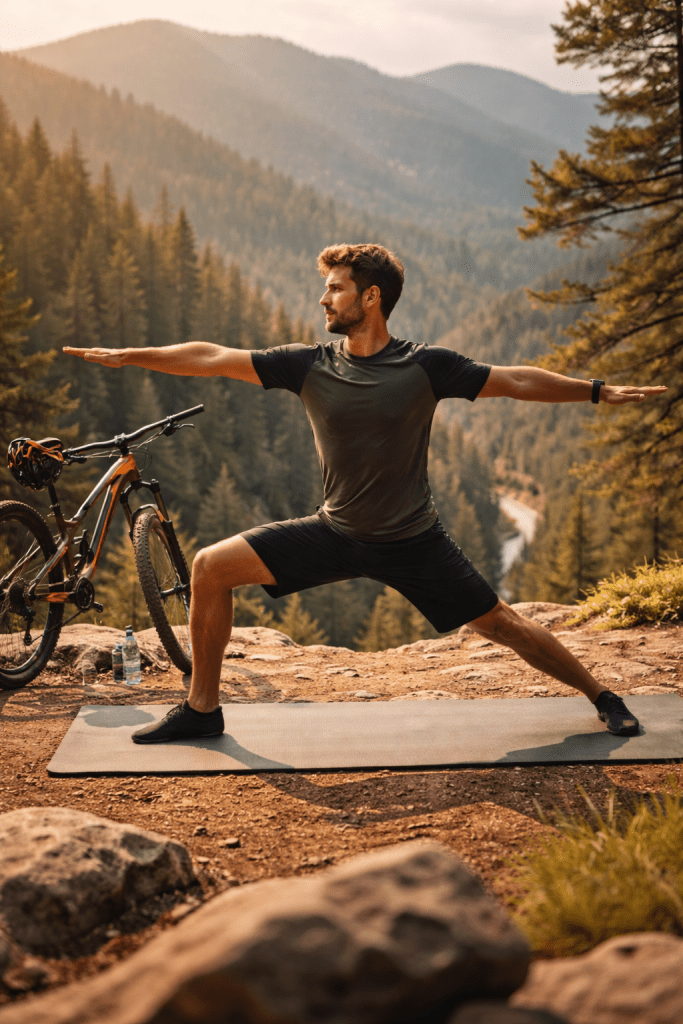
From Mat to Trail // How Yoga Elevates Your Mountain Biking Game
Mountain biking is often framed as a test of strength, speed, and technical skill, but those who ride long enough learn that success on the trail depends just as much on awareness, balance, and control. Yoga offers a framework for developing these less visible skills. Far from being a passive or purely restorative practice, yoga trains the body and mind to work together under stress—exactly what mountain biking demands when terrain becomes unpredictable and fatigue sets in.
One of the most direct benefits yoga provides to mountain bikers is improved mobility. Tight hips, hamstrings, calves, and shoulders limit a rider’s ability to move freely on the bike, especially in aggressive terrain or long descents. Yoga systematically opens these areas, allowing riders to maintain better body positioning, absorb impacts more effectively, and reduce unnecessary tension. Greater mobility translates into smoother riding and less energy wasted fighting the bike.
Balance is another critical skill where yoga and mountain biking intersect. Many yoga postures require stability on a single leg or in asymmetrical positions, mirroring the micro-adjustments riders constantly make on uneven trails. Practicing balance off the bike strengthens the small stabilizing muscles that keep riders centered and responsive, improving control through corners, rock gardens, and technical climbs.

Breath control, a foundational element of yoga, plays a powerful role in mountain bike performance. Riders often hold their breath during difficult sections, which increases tension and accelerates fatigue. Yoga trains conscious breathing patterns that help regulate heart rate and maintain calm under pressure. On long climbs or high-consequence descents, steady breathing allows riders to stay focused and conserve energy when it matters most.
Strength developed through yoga differs from traditional gym training, emphasizing functional, full-body engagement rather than isolated muscle groups. Core stability, shoulder integrity, and hip strength are reinforced through sustained poses that require both effort and precision. This kind of strength supports better bike handling, protects joints, and enhances endurance over long rides without adding unnecessary bulk or stiffness.
Injury prevention is one of yoga’s most overlooked advantages for mountain bikers. Repetitive riding patterns and hard impacts can create muscular imbalances that lead to overuse injuries or chronic pain. Yoga helps identify and correct these imbalances by bringing awareness to weak or neglected areas. Over time, this reduces strain on knees, lower backs, and shoulders—areas commonly injured in mountain biking.

Mental resilience is another area where yoga supports success on the trail. Mountain biking demands quick decision-making in high-stress situations, and hesitation often leads to mistakes. Yoga cultivates present-moment awareness, teaching riders to observe fear without being overwhelmed by it. This mental clarity allows for more confident line choices and a calmer response when conditions change suddenly.
Recovery is essential for consistent progress, and yoga provides an effective way to restore the body between rides. Gentle flows and longer holds improve circulation, reduce soreness, and accelerate recovery without the fatigue that intense training can create. For riders balancing work, family, and trail time, yoga offers a sustainable way to stay ready to ride without burning out.

Yoga also encourages a deeper connection to the body, helping riders recognize early signs of fatigue or strain before they become injuries. This awareness fosters smarter training decisions and longer riding careers. Mountain biking is not just about pushing limits, but about knowing when to back off, reset, and ride again another day.
Ultimately, yoga enhances mountain bike success by addressing the whole rider rather than isolated components. It improves mobility, balance, breath, strength, focus, and recovery in a way that directly supports performance on the trail. When integrated consistently, yoga becomes more than a supplement—it becomes a quiet but powerful ally, helping riders move with confidence, ride with intention, and stay connected to the joy that first drew them to the bike.

Categories: Opinion
 Opinion: The Healing Rhythm of the Ride
  Opinion: The Link Between Float Tanks and Performance
  Opinion: The Art of Recovery // Healing Right After a Mountain Bike Injury
  Opinion: The Balance of Responsibility in Modern Bike Parks
  Cascadia MTB
Leave a comment